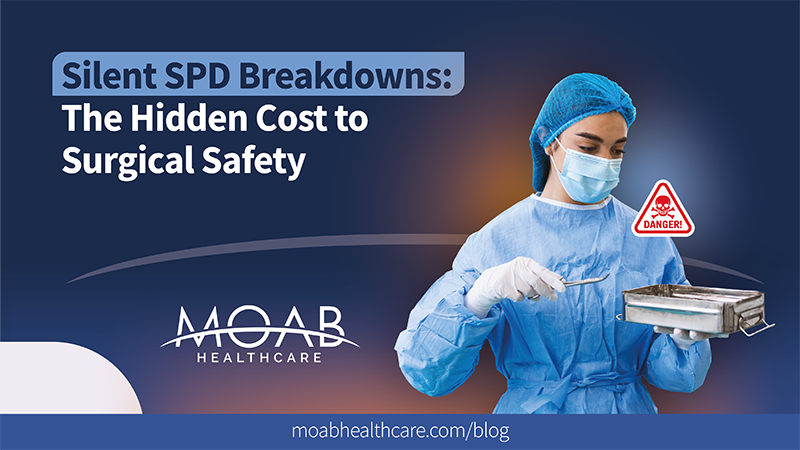
Sterile Processing (SPD) is the hidden backbone of surgical safety. Every instrument that enters the operating room passes through SPD, yet the department is often overlooked until something goes wrong. When workflows break down, health systems face preventable delays, surgeon dissatisfaction, and increased risk of surgical site infections (SSIs).
SSIs alone cost $20k–$40k per case, and unplanned returns to the OR can reach $159k per case.
The Overlooked Challenges in SPD
- Inconsistent practices in decontamination and assembly
- Documentation gaps jeopardizing survey readiness
- Frequent tray errors affecting OR throughput
- Leadership instability that undermines culture and accountability
A Typical Scenario
Picture this: a surgical team is ready to begin, but a critical instrument tray is missing or incomplete. The OR is delayed, the surgeon is frustrated, and the patient waits longer under anesthesia. Behind the scenes, SPD staff are scrambling to correct the error.
This isn’t an isolated event—it’s a symptom of systemic breakdowns in process, training, and oversight.
How Moab Strengthens SPD
Moab’s People–Process–Protection model stabilizes and elevates SPD performance:
- Certified staff and interim leaders who bring immediate expertise
- Tray audits and QA programs to reduce errors and IUSS reliance
- Continuous compliance support aligned with TJC, DNV, CMS, AAMI, and AORN standards
All without requiring additional capital equipment.
Proven Impact
Organizations partnering with Moab often see measurable improvements:
- Reduced tray errors and lower IUSS rates
- Better first-case starts that improve OR efficiency
- Fewer surgical delays and cancellations
- Stronger survey readiness with cleaner documentation
- Higher surgeon satisfaction and fewer escalations
Why This Matters Now
Surveyors are placing greater emphasis on:
- Instrument reprocessing accuracy
- Documentation integrity
- Staff competency
- Daily compliance behaviors
The message is clear: SPD performance must be consistent every day, not just during survey preparation. Nursing leaders are increasingly examining SPD as a strategic priority for patient safety and regulatory readiness.
Looking Ahead
As surgical volumes rise and regulatory scrutiny intensifies, SPD stabilization is no longer optional—it’s essential. Health systems that invest in strengthening SPD today are better positioned to avoid costly disruptions tomorrow.
Moab’s mission is to ensure sterile processing departments operate with reliability, accountability, and confidence—protecting patients, supporting surgeons, and safeguarding accreditation.