The Most Overlooked Infection Prevention Strategy in Healthcare

Healthcare leaders invest significant time and resources into reducing healthcare-associated infections (HAIs). Conversations often focus on hand hygiene compliance, environmental cleaning, isolation protocols, surveillance programs, and antimicrobial stewardship.

All of these initiatives are essential.

But there is another critical component of infection prevention that rarely receives the same level of executive attention:

Sterile Processing.

At Moab Healthcare, Sterile Processing is not one of many service lines—it is our sole focus. For decades, our team has worked inside hospitals helping healthcare organizations improve reprocessing quality, strengthen compliance, support surgical services, and ultimately protect patients.

What we’ve learned is simple:

A hospital cannot achieve world-class infection prevention outcomes without a high-performing Sterile Processing Department (SPD).

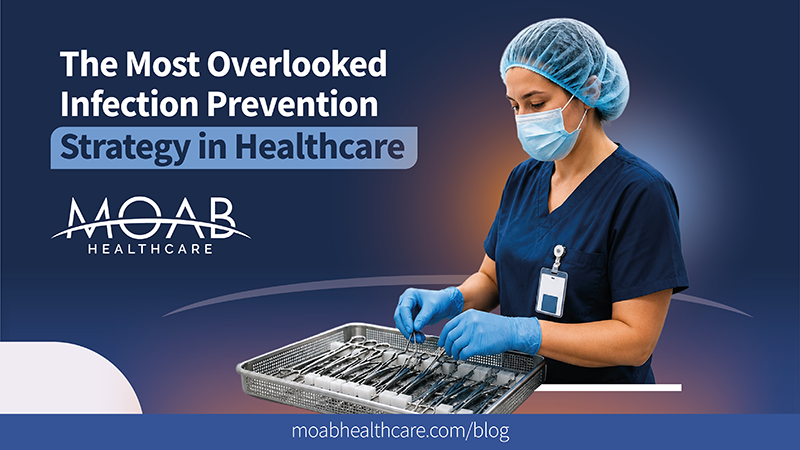
Every surgical instrument, laparoscopic set, orthopedic tray, and procedural device used in patient care passes through SPD before it reaches a patient. The quality, consistency, and reliability of instrument reprocessing directly influence clinical outcomes, regulatory readiness, operational efficiency, and patient safety.

When Sterile Processing performs exceptionally well, nobody notices.

When it fails, everyone does.


Infection Prevention Begins Long Before the Procedure

When healthcare organizations investigate infection prevention concerns, attention often centers on practices occurring during or after patient care.

However, the foundation for safe care is frequently established much earlier.

Long before a patient enters the operating room, a procedure suite, or an ambulatory surgery center, instruments have already undergone a complex reprocessing journey.

That journey includes:

  • Decontamination
  • Cleaning and disinfection
  • Inspection and testing
  • Assembly
  • Sterilization
  • Storage
  • Distribution

Each step must be executed correctly, documented appropriately, and performed consistently.

A breakdown at any point can create risk.

We’ve seen organizations struggle with:

  • Inconsistent reprocessing practices
  • Documentation gaps
  • Instrument inspection failures
  • Excessive Immediate Use Steam Sterilization (IUSS)
  • Staffing shortages
  • Insufficient competency validation
  • Variability between shifts and technicians
  • Lack of quality assurance oversight

To infection prevention professionals, these are not simply operational concerns.

They are patient safety concerns.


The Hidden Risks Lurking Inside Sterile Processing

Many hospitals believe their SPD is functioning adequately because surgeries continue and no major event has occurred.

Unfortunately, risk often remains hidden until a survey, adverse event, infection investigation, or significant operational disruption exposes vulnerabilities.

Common warning signs include:

Frequent IUSS Utilization

Immediate Use Steam Sterilization should be the exception, not the routine. High IUSS rates often indicate deeper issues involving inventory management, workflow inefficiencies, tray utilization, or staffing.

Documentation Deficiencies

Missing biological monitoring records, incomplete sterilization documentation, or inconsistent competency files can create substantial regulatory exposure during accreditation surveys.

Instrument Reliability Concerns

Damaged instruments, missing components, retained soil findings, and assembly errors affect both patient safety and surgical team confidence.

Staffing Turnover and Leadership Gaps

Frequent turnover can introduce process variation, training inconsistencies, and accountability challenges that impact overall department performance.

Survey Readiness Challenges

Accrediting organizations continue increasing scrutiny of Sterile Processing practices, competency validation, infection prevention standards, and documentation integrity.

In many cases, these warning signs are present months—or even years—before a formal finding occurs.


The Financial Impact of Sterile Processing Performance

Historically, sterile processing has been viewed as a support department.

Today’s healthcare environment demands a different perspective.

Hospital margins remain under pressure. Labor costs continue rising. Supply chains remain challenging. Leadership teams are being asked to improve clinical outcomes while protecting already-thin operating margins.

In this environment, sterile processing is no longer simply a quality initiative.

It is a financial performance initiative.

When SPD performance suffers, hospitals often experience:

  • Surgical delays
  • First-case start challenges
  • Case cancellations
  • Increased labor expenses
  • Overtime costs
  • Surgeon dissatisfaction
  • Lost operating room capacity
  • Avoidable compliance risks

Every delayed case impacts productivity.

Every cancelled procedure impacts revenue.

Every preventable inefficiency creates unnecessary financial strain.

The organizations achieving the best operational outcomes recognize that improving sterile processing is not just about compliance.

It is about protecting surgical throughput, preserving revenue, reducing waste, and strengthening margin performance.


Why Infection Prevention and Sterile Processing Must Work Together

The strongest healthcare organizations understand that Infection Prevention and Sterile Processing share the same mission:

Protecting patients from preventable harm.

The relationship should be collaborative, not siloed.

Successful organizations often establish:

  • Joint quality reviews
  • Infection prevention rounding within SPD
  • Shared performance metrics
  • Competency validation programs
  • Reprocessing observations
  • Documentation audits
  • Collaborative process improvement initiatives

When Infection Prevention and SPD leaders work together, risks can be identified and addressed before they impact patients, survey performance, or operational outcomes.

When these departments operate independently, vulnerabilities often remain hidden until a problem forces attention.


What We’ve Learned After Decades in Sterile Processing

As a founder-owned company devoted exclusively to Sterile Processing, we have worked with healthcare organizations across the country of all sizes—from community hospitals to large academic medical centers.

One lesson stands out consistently:

Most organizations do not have a people problem.

They have a systems problem.

Dedicated professionals are often working within processes that have evolved over time without standardization, accountability, measurement, or adequate leadership support.

Sustainable improvement requires more than temporary fixes.

It requires a comprehensive strategy focused on people, process, and protection.

People

Building stable teams with highly qualified Sterile Processing professionals and leaders who understand modern reprocessing requirements.

Process

Creating standardized workflows, quality assurance programs, tray optimization initiatives, and measurable performance expectations.

Protection

Strengthening compliance, supporting survey readiness, reducing risk exposure, and protecting patients through consistent execution.

At Moab Healthcare, we call this our People–Process–Protection approach.


Why Moab Healthcare

There are many healthcare consulting firms.

There are many staffing firms.

There are many organizations that occasionally work in sterile processing.

Moab Healthcare is different.

Sterile Processing is all we do.

Our company was built by Sterile Processing professionals who have dedicated their careers to improving reprocessing quality, patient safety, surgical performance, and operational excellence.

We understand sterile processing because we live it every day.

Our mission extends beyond improving SPD metrics.

We help healthcare organizations:

  • Improve patient safety
  • Strengthen infection prevention efforts
  • Reduce operational inefficiencies
  • Support surgical services
  • Improve compliance outcomes
  • Protect financial performance

Because better Sterile Processing doesn’t just improve a department.

It improves the entire hospital.


Looking Ahead

The future of healthcare will continue to challenge leaders with increasing regulatory requirements, staffing pressures, financial constraints, and patient safety expectations.

At the same time, healthcare-associated infections remain a critical focus for health systems nationwide.

The hospitals that thrive will be those that recognize a simple but powerful truth:

Sterile Processing is not just a support function. It is a frontline patient safety function.

For Infection Prevention leaders, it may be one of the most important—and most overlooked—opportunities to improve clinical outcomes, operational performance, and organizational resilience.

At Moab Healthcare, we remain passionate about helping hospitals strengthen sterile processing because we believe every properly reprocessed instrument represents something much bigger:

A safer patient.

A stronger surgical program.

And a healthier hospital.


About Moab Healthcare

Moab Healthcare is a founder-owned healthcare services company dedicated exclusively to Sterile Processing. Through our People–Process–Protection approach, we help hospitals improve patient safety, strengthen infection prevention programs, enhance surgical performance, improve compliance, and protect financial outcomes.

Because Sterile Processing Is All We Do.